SIGN-UP NOW FOR A GROUP DIGITAL PHOTOGRAPHY CLASS: SIGN-UP
SIGN-UP FOR A ONE ON ONE DIGITAL PHOTOGRAPHY CLASS: SIGN-UP
TAKE THIS COURSE IF YOU WANT TO…
-Learn 6 Digital Photo Composition Strategies.
-Apply what you have learned in our DSLR/Point and Shoot classes out in the field.
-Test your camera’s capabilities side by side with your instructor in amazing locations.
-Appreciate local areas in a whole new way and capture amazing images that will last a lifetime.
-Meet and learn from some of our 100+ instructors across the country.
Company Information:
Contact Name: Sam Johnston
Email: sam@studio4designllc.com
Organization: Digital Photography Classes
Address: 4012 W Estrella Street, Tampa FL 33629
Phone: (813) 419-2144 – Cell/Text: (813) 254-4413
Website to Sign-up Now: studio4designllc.com/digital-photo-classes.html
Hours of Operation:
|
Monday |
9:00 AM to 5:00 PM |
|
Tuesday |
9:00 AM to 5:00 PM |
|
Wednesday |
9:00 AM to 5:00 PM |
|
Thursday |
9:00 AM to 5:00 PM |
|
Friday |
9:00 AM to 5:00 PM |
|
Saturday |
9:00 AM to 5:00 PM |
|
Sunday |
9:00 AM to 5:00 PM |
Online Photography Classes
Photography is the art of reproducing images of people, things or places in their specific likeness. These images can be transferred on any photosensitive material. Photography consists of taking and printing images.
The foundation of photography is the cam, the instrument or device that works on the concept of optics. The electronic camera and photographic methods have actually gone through extraordinary changes given that the time the very first cam was made. The earlier model did not contain the film; rather, it had a little light-shield box with lens and translucent screen on either side. The image that took a trip through the lens was stored on the screen. Known as 'video camera obscura,' it disappeared than a sketching gadget for artists.
The researchers discovered the quality of silver nitrate that alters its color when exposed to light. This was the start of photogram, an approach of making long-term images.
They would position items on the paper dipped in silver nitrate and expose it to the sunshine. After at some point the area covered under the object stayed white while the remainder of the area turned black. The image formed was short-lived, so the approach did not last long.
Over the centuries, the principles, the approach and the product used in photography went through lots of changes. After try out numerous methods like Daguerre and calotype procedure, lastly collodion, or the damp plate method was widely accepted.
Modern photography has given a totally brand-new significance to the whole understanding of life and personal privacy. Photography has made it possible to catch and preserve special minutes, in private and in public life. History ended up being more authentic with images, and photos acted as evidence in many cases. Individuals made their family tree in their albums. Unexpectedly life was a lot more fun and significant.
With the tremendous technological advances in the art of photography, it disappears simply fun and romp but has actually acquired the dimensions of a full-fledged profession. Photography has lots of branches and types, such as:
- Aerial photography is the art of taking pictures from the air.
- Art photography is devoted to beautiful pictures for the sake of charm just.
- Studio or marketing photography is devoted to promo of institutions and items.
- Photojournalism takes pictures of occasions to support the newspaper article and to create awareness among the people.
- Outdoor and travel photography is focused on taking images of landscapes and natural locations.
- Sports photography records pictures of the sporting events and video games that take place in the world.
- Some kinds of photography like the macro and scientific and macro or close up photography are restricted to specific fields and are not widely known.
The beauty of photography lies as much in the end item as in the process of taking pictures. Taking a look at an album is like travelling down memory lane; it makes us feel emotional and highly sentimental.
Photography is the art of reproducing pictures of people, things or locations in their specific likeness. Photography consists of taking and printing photos.
The backbone of photography is the video camera, the instrument or device that works on the principle of optics. Modern photography has actually offered a completely new meaning to the entire perception of life and personal privacy. Photography has actually made it possible to record and preserve special moments, in personal and in public life.
CLASS DESCRIPTION
Group Composition in the Field Classes – 3 hours – $150
Each Composition in the Field photography class begins with a talk with one of our experienced instructors, and then you and your fellow students take a stroll through one of a variety of photogenic locales (in any of the cities the DPC are held in). There is street photography, magnificent interiors, farmers markets, zoos, landscapes, and more, photos of which are included within. These photos are a mix of student and instructor images in many different venues and cities across the United States.
You will have fun in the three hour session, learn to shoot strategically, get more interesting photos of the event, and walk away with a foundation to improve your photographs in the future, whether you’re traveling, or at a birthday party and everywhere in between.
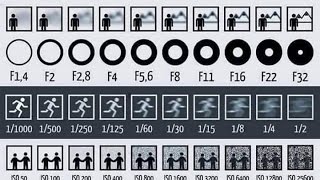
A better way of calculating your camera exposures, as everything in photography utilizes math. For instance, take your light meeter. It's based off of foot candles. 1 candle = 1 second; 30 candles of light which is in open shade all over the world would = 1/30 of a second. Now lets jump to the brightest white, mid day cloud light by the sun has 500 candles of light on it, which = 1/500 of a second shutter speed. Now what ever you set your ISO to, for instance ISO 100 you take the square root of 100 = 10. To shoot the cloud at ISO 100 and utilize the 1/500 of a second shutterspeed, your f/stop would be f/10. Same ISO in open shade your exposure would be 1/30 f/10, or 1/60 f/5, 1/125 f/2.5